How to Cook Venison for Beginners (Without the Gamey Taste)
How to cook venison for beginners can feel intimidating. Venison is lean, unfamiliar, and often carries the unfair reputation of tasting “gamey.” The truth? With the right techniques, seasoning, and attention to cuts, venison is tender, flavorful, and one of the most rewarding proteins you can put on the table.
Many people searching for venison recipes for beginners aren’t sure which cut to choose, how to prepare it, or how to avoid overcooking. This guide will walk you through cooking venison tips, from understanding flavor differences and choosing the best cuts, to preparing ground venison and whole cuts. Whether you’re making a quick weeknight meal with ground venison recipes or roasting a backstrap or top round, these tips will help you master the natural flavor of wild game and build confidence in the kitchen.
What Does Venison Taste Like?
Venison has a clean, rich flavor that’s naturally lean with a slightly earthy finish. The “gamey” taste people often complain about can come from a few common factors, including:
- Improper field care right after the harvest
- Stress on the animal prior to harvest
- Warm temperatures or not cooling the meat quickly enough
- Waiting too long to skin the animal in mild/warm weather
- Freezing meat incorrectly or allowing air exposure during storage
- Not fully trimming silver skin, connective tissue, and excess fat
- Choosing a cut that isn’t well suited for the cooking method
- Overcooking lean cuts, which can make them taste strong or dry
- The age and sex of the animal, which can influence tenderness and flavor
I understand that things don’t always go perfectly in the field—I’ve been there myself harvesting my own deer—but I do my best from field to freezer to ensure we honor the animal and enjoy every part of the harvest.
Flavor Differences Between Mule Deer and Whitetail Deer
Not all venison tastes the same, and one reason is the species of deer and what the animal eats. Mule deer often have a slightly richer, more earthy flavor because their diet commonly includes sagebrush, bitter forbs, and native shrubs found in arid western landscapes. Whitetail deer, especially those harvested in agricultural areas, tend to have a milder, slightly sweeter flavor thanks to diets heavy in grasses, acorns, corn, and other crops. Habitat, age, and season also play a role, but diet is one of the biggest factors influencing flavor. Regardless of species, proper field care, trimming, and cooking technique matter far more than the deer itself when it comes to producing tender, great-tasting venison.
Common Mistakes Beginners Make When Cooking Venison
If venison has tasted tough or strong in the past, one of these is usually the culprit:
- Overcooking: Venison is extremely lean. Cooking it past medium quickly dries it out.
- Not Adding Fat: Because venison lacks intramuscular fat, adding oil, butter, bacon fat, or another cooking fat helps keep the meat moist and flavorful.
- Using High Heat on Tough Cuts: Shanks, shoulders, and neck meat need low and slow cooking or pressure cooking (Instant Pot) — not grilling.
- Over-Seasoning: Heavy marinades and strong spices mask the natural flavor instead of enhancing it.
- Skipping the Rest: Like beef, venison needs time to rest so the juices redistribute.
Best Venison Cuts for Beginners
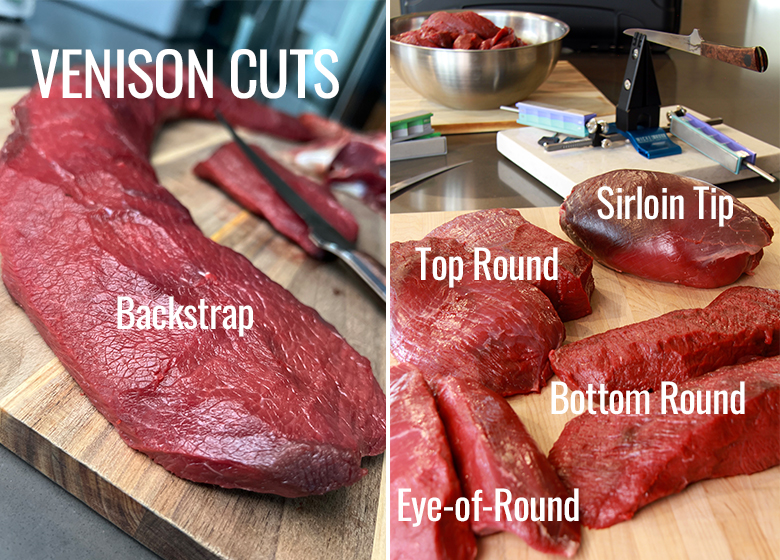
If you’re new to cooking venison, start with these forgiving cuts:
Backstrap (Loin) and Tenderloins
- Tender and mild
- Best for grilling, pan-searing, or reverse searing
Top Round, Bottom Round or Eye of Round
- Lean but versatile
- Excellent for roasts, steaks and schnitzel
- Works well for reverse searing, stews, chili, soups and chile verde
Ground Venison
- Great for weeknight meals
- Works well in meatballs, burgers, casseroles, soups, chili and pasta dishes
When You’re Ready: Venison Shanks and Neck Roasts
Save tougher cuts like shanks and shoulders for slow cooking once you’re comfortable, but don’t be discouraged—shredded deer shanks and neck roasts yield a surprising amount of flavorful meat that can be used in a wide variety of easy weeknight and hearty weekend meals.
A Note on Ground Venison and Fat Content
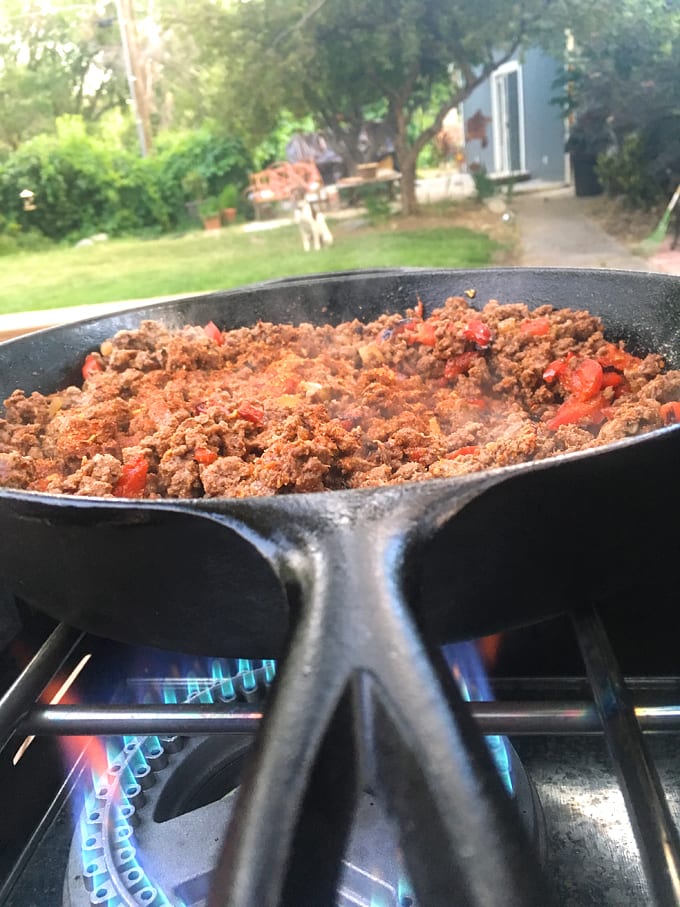
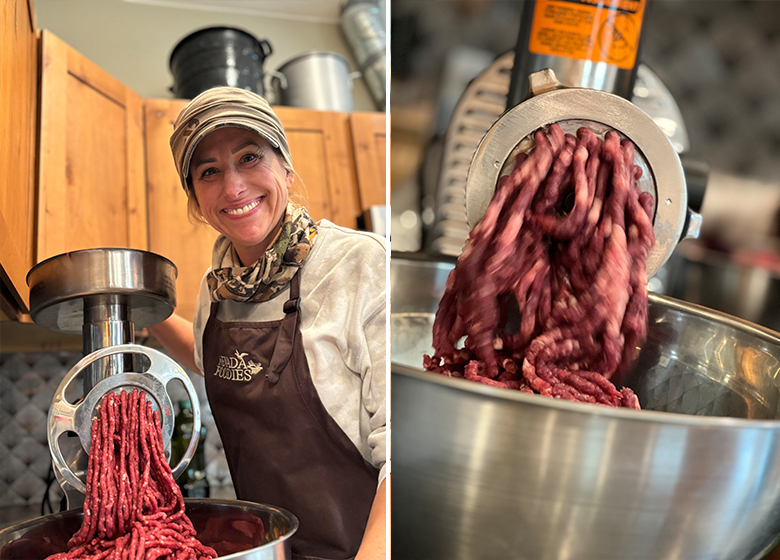
Ground venison can be prepared a few different ways, depending on personal preference. Some hunters choose to grind venison 100% pure with no added fat, which keeps the meat extremely lean but often requires adding oil or butter during cooking to prevent it from drying out. Others prefer blending venison with beef fat or pork fat to improve moisture and texture. Common ratios are 85/15 or 80/20 (venison to fat), which strike a balance between flavor and juiciness while still letting the venison shine. No matter which option you choose, adjusting your cooking method—such as using lower heat and adding a bit of fat to the pan—will help ensure tender, flavorful results.
Ground Venison Fat Ratio Guide
| Venison to Fat Ratio | Fat Source | Best Uses | What to Expect |
|---|---|---|---|
| 100% Venison (No Fat) | None | Chili, soups, tacos, pasta sauces | Very lean; requires added oil or butter when cooking |
| 90/10 | Beef or Pork Fat | Meat sauces, casseroles | Still lean but more forgiving than pure venison |
| 85/15 | Beef or Pork Fat | Meatballs, meatloaf, stuffed dishes | Balanced flavor and moisture |
| 80/20 | Beef or Pork Fat | Burgers, patties, sausage | Juicy, tender, and beginner-friendly |
| 70/30 (less common) | Pork Fat | Sausage making | Rich and moist; strong fat presence |
Simple Seasoning Is Best for Venison
One of my core cooking philosophies is using simple ingredients to let the meat shine. Venison doesn’t need to be hidden under heavy sauces.
Basic Venison Seasoning
- Kosher salt
- Freshly ground black pepper
- Garlic or onion powder
- Fresh herbs like rosemary or thyme
Once you’re confident, you can layer in flavors like wine sauces, mushrooms, or light pan reductions — but start simple.
The Best Cooking Methods for Learning How to Cook Venison for Beginners
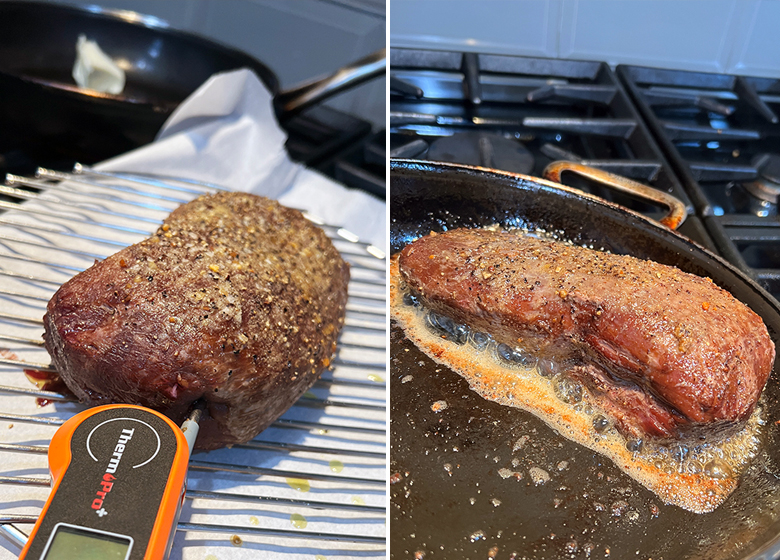
Reverse Searing (Highly Recommended)
Perfect for backstrap, top round and bottom round.
- Slow roast at low temperature
- Finish with a hot sear
- Produces even doneness and a beautiful crust
Try this with my Reverse-Seared Venison Top Round Roast
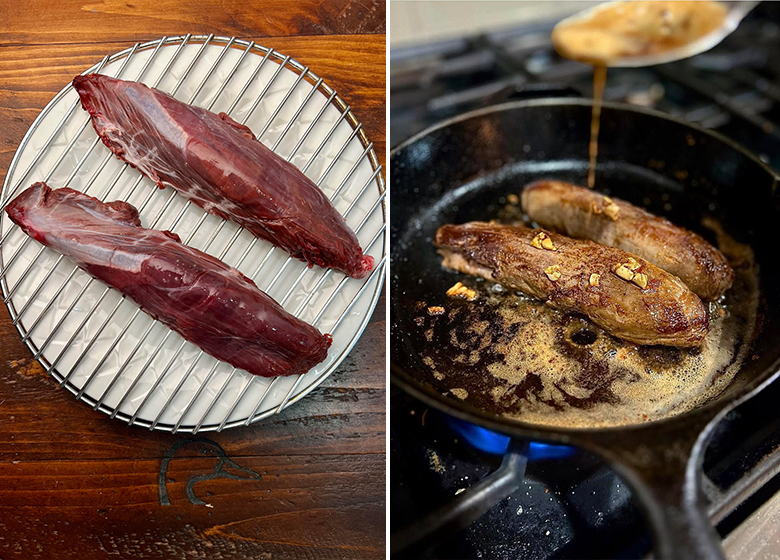
Pan Searing
Best for steaks and medallions.
- Hot pan, quick cook (cast iron skillets, carbon steel skillets and titanium skillets)
- Finish with butter, pan sauce, chimichurri or fresh herbs
- Rest before slicing
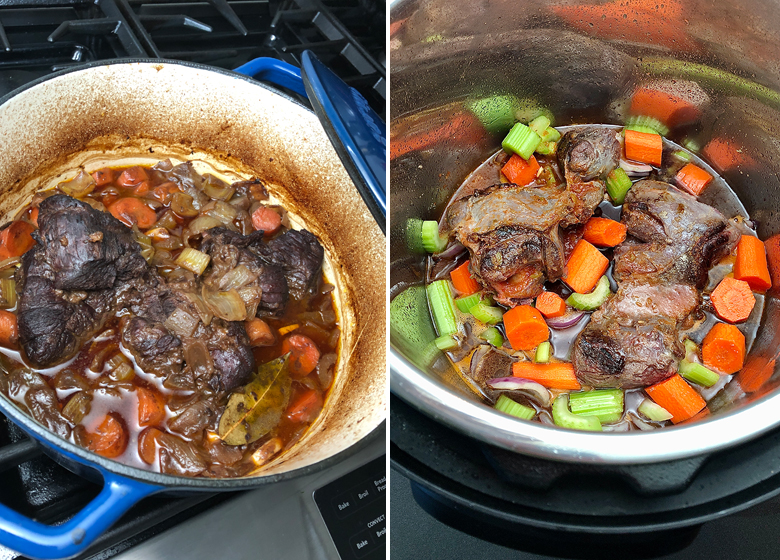
Slow Cooking, Braising and Instant Pot
Ideal for tough cuts like shank or shoulder.
- Low heat breaks down sinew
- Results in fork-tender meat
- Perfect for stews and gravies
Try this with my Instant Pot Venison Shanks and Polenta
Venison Temperature & Doneness Guide
Using a meat thermometer is essential.
- Rare: 120–125°F
- Medium-Rare: 130–135°F (ideal for most cuts)
- Avoid cooking Medium: 140°F
- Avoid cooking past 145°F
Always rest venison 5–10 minutes before slicing.
Does Soaking Venison Remove the Gamey Taste?
This is one of the biggest myths in wild game cooking, in my personal opinion. Soaking venison in milk, saltwater, or vinegar does not fix poor field processing and cooking techniques. Proper trimming, correct temperatures, and appropriate cooking methods matter far more than soaking.
Easy How to Cook Venison Recipes for Beginners
If you’re ready to put these tips into practice, start here:
- Flaky Puff Pastry Ground Venison Meat Pie – the kind of rustic dinner that warms the kitchen and brings everyone to the table
- Venison Schnitzel – tender, crispy, and approachable
- Venison Cornbread Casserole – This recipe works perfectly with ground venison
- Venison Parmesan Patties – an easy Italian-inpsired ground venison recipe
- Reverse-Seared Venison Top Round Roast – perfect for special dinners
- Ground Venison Rollups – easy weeknight comfort food that’s flexible and fun
- Venison Meatballs with Gnocchi – rich without being heavy
- Venison Enchilada Meatballs – baked to perfection with a rich red sauce
- Ground Venison Meat Pie – savory and hearty comfort food
More Meal Ideas That Work for Cooking with Venison
- Tacos & Burritos – ground venison or shredded roast
- Enchiladas & Quesadillas – flavorful, lean fillings
- Italian Dishes – pasta sauces, lasagna, meatballs
- Spaghetti & Meat Sauces – ground venison adds richness
- Steaks – backstrap, tenderloin, or top round
- Roasts – slow-roasted top round or shank
- Stews & Braises – shank, shoulder, or tougher cuts
- Soups & Chili – ground venison or diced roast
- Burgers & Sliders – perfect with 15–20% fat blend
- Stir-Fries & Skillet Meals – quick-cooked backstrap or tender cuts
Each recipe builds confidence while honoring the meat.
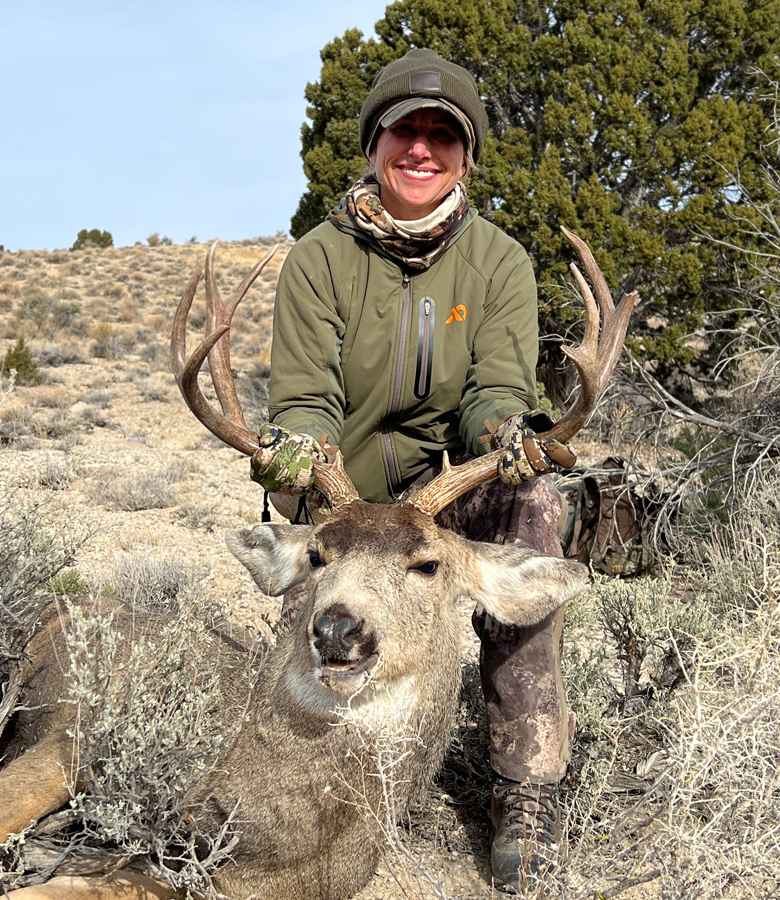
Learning How to Cook Venison Is About Respecting the Animal
Every venison recipe tells a story — of the hunt, the land, and the care taken from field to table. When we cook wild game thoughtfully, we honor the animal and the effort behind every meal.
Venison doesn’t need to be complicated. With the right cut, simple seasoning, and proper cooking technique, it becomes one of the most rewarding meats you’ll ever serve.
More Wild Game Venison Recipes You’ll Love
If you love cooking venison, there are plenty of other recipes to explore—from easy weeknight dishes using ground venison like meatballs, rollups, and burgers, to whole cuts like backstrap, top round, and shank prepared as roasts, schnitzel, or slow-cooked braises. Each venison recipe is designed to highlight the natural flavor of the meat while keeping cooking approachable, so you can enjoy a variety of meals that make the most of every cut.