
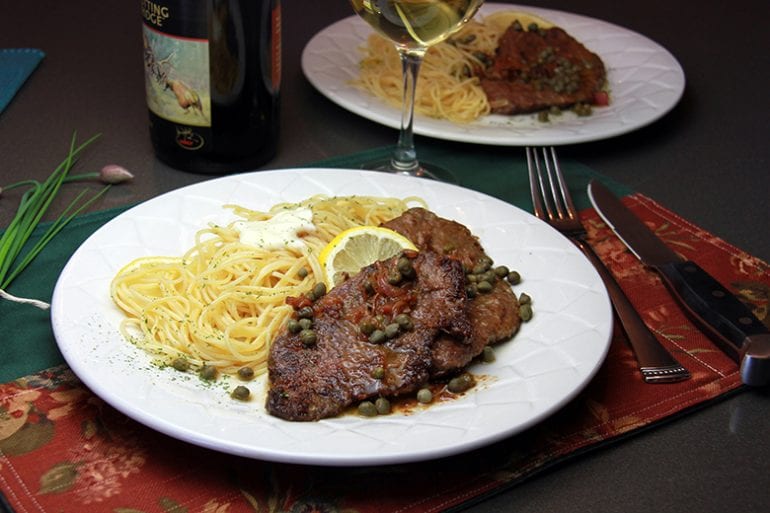
Elk Scaloppine: A Wild Game Twist on a Classic Italian Dish
Elk Scaloppine is a classic Italian dish celebrated for its simplicity and quick prep-to-plate process. Traditionally made with veal or chicken, this version takes thinly sliced elk cutlets to the next level, finished with rich butter, a bright lemon wine sauce, and briny capers—perfect for both weeknight dinners and special occasions.
The word scaloppine comes from the Italian scaloppa, meaning thinly sliced cutlets of meat, often curled like shells or scallops. The slices are lightly floured, pan-fried, and served with a delicate sauce, allowing the meat to shine.
While veal or chicken are traditional, elk makes an exceptional substitute. For best results, slice the elk while it’s partially frozen to ensure even cuts, then gently pound the slices with a meat mallet until uniformly thin. Generously season both sides with kosher salt and freshly ground black pepper, lightly dredge in flour, and pan-fry in butter until golden brown.
Finish the elk with a simple white wine and lemon reduction, garnished with briny capers for bursts of bright, savory flavor. The result is an elegant, flavorful dish with minimal prep—a true testament to how wild game can elevate classic Italian cuisine.
Venison or Antelope Alternatives
This recipe works with other thinly sliced wild game steaks, such as venison backstrap or antelope. Because these meats are lean like elk, it’s important not to overcook—aim for medium-rare to medium for the most tender, juicy results. For even cooking, slice the steaks while partially frozen and gently pound them to an even thickness. Lightly dredging in flour before pan-frying helps create a golden crust while keeping the meat moist, and finishing with the lemon wine sauce and briny capers ensures bright, savory flavor in every bite.
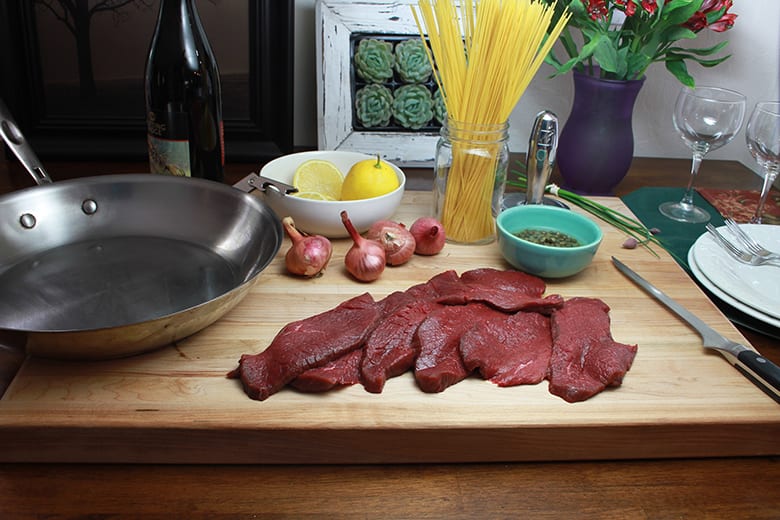
Carefully slice the elk into 8 steaks, roughly ½ inch thick. It’s easier to slice when the meat is partially frozen.
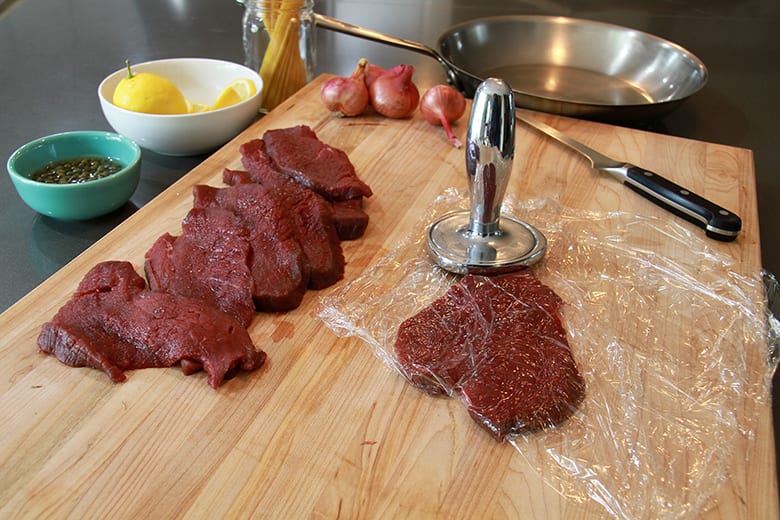
Place each slice between 2 pieces of plastic wrap and pound with a meat mallet to about ¼ inch thickness. Season both sides with kosher salt and freshly ground black pepper.
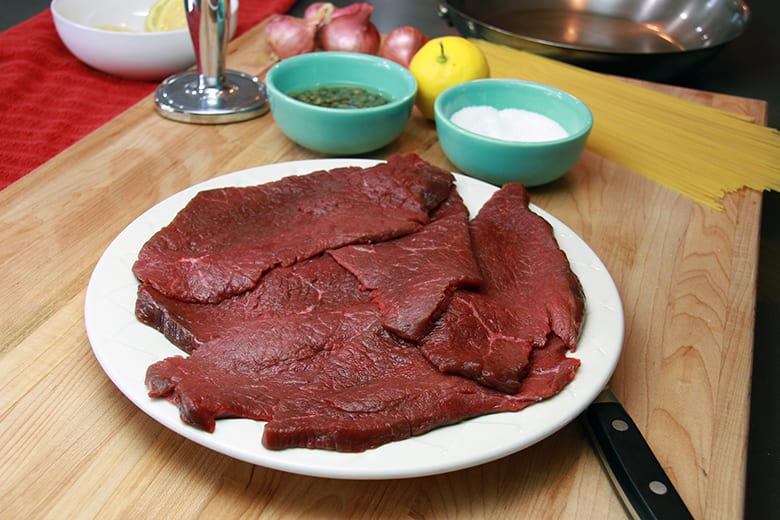
Lightly coat each steak in flour, shaking off any excess. Set aside on a plate.
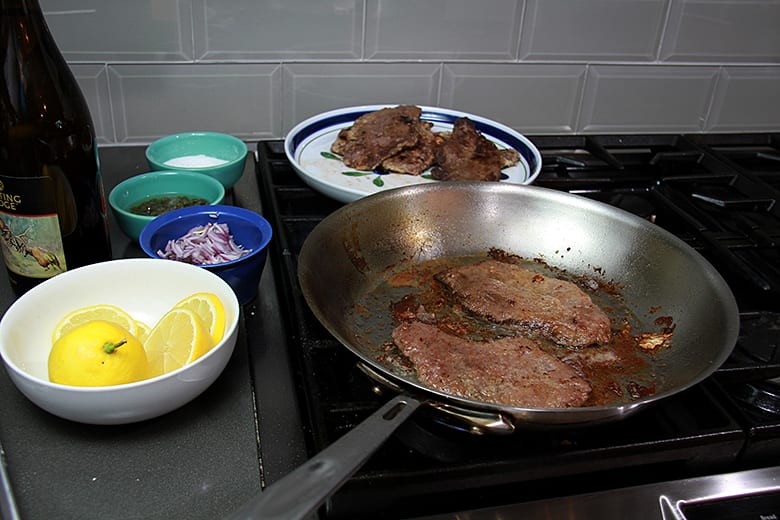
In a large skillet, heat 4 tablespoons butter over medium heat. Working in batches, cook the elk until golden brown, about 2 minutes per side. Remove the steaks and set aside.
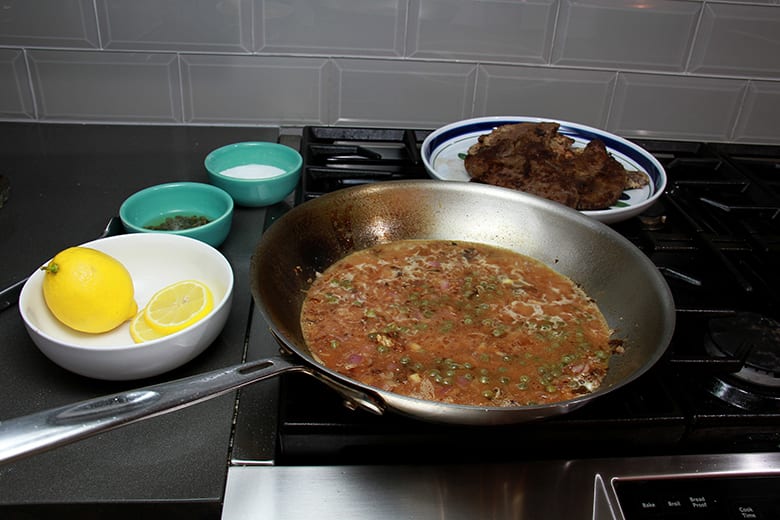
Add the remaining butter and shallots to the skillet. Cook until softened, about 2–3 minutes. Add white wine, scraping up any browned bits from the skillet. Stir in capers and the juice from ½ a lemon, cooking until the sauce reduces by half. Taste and adjust seasoning with salt and pepper if needed.
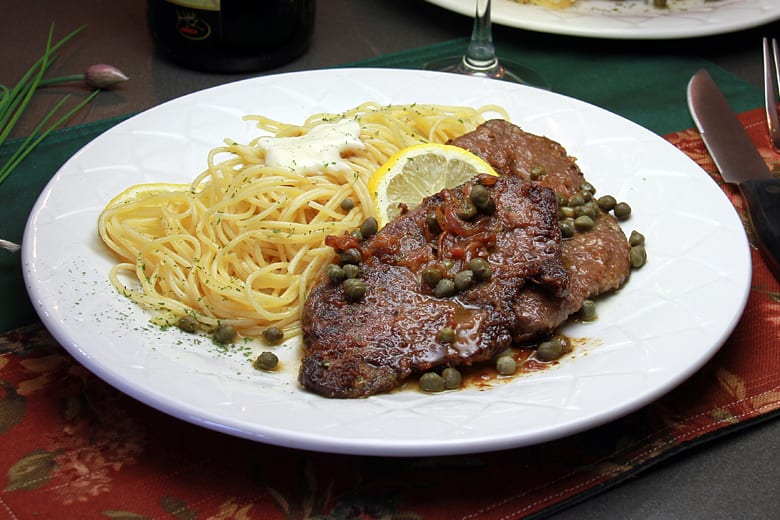
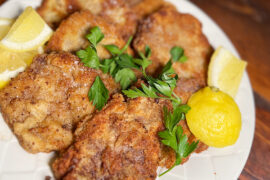
Transfer the elk to a serving platter, pour the sauce over the top, and garnish with sliced lemons. Serve with cooked thin spaghetti or your favorite side.
More Elk Recipes to Try
Elk is one of the most versatile wild game proteins you can cook with, and the possibilities are endless. From hearty ground elk dishes like elk skillet lasagna and elk parmesan patties to comforting, slow-cooked favorites like elk cabbage rolls and rich elk burgundy, there’s a recipe for every occasion.
Elk Scaloppine with Lemon Wine Sauce
Ingredients
- 1 1/2 lbs boneless elk, sliced into 8 steaks, about 1/2 inch thick
- kosher salt
- freshly ground black pepper
- 1 cup all-purpose flour
- 6 tbsp unsalted butter
- 2 shallots, finely diced, about 1/2 cup
- 3/4 cup dry white wine, chardonnay
- 1/4 cup capers, drained and rinsed
- juice from 1/2 lemon
- 6 lemon slices
- cooked thin spaghetti noodles
Instructions
- Carefully slice the elk into 8 steaks, roughly ½ inch thick. It’s easier to slice when the meat is partially frozen. Place each slice between 2 pieces of plastic wrap and pound with a meat mallet to about ¼ inch thickness. Season both sides with kosher salt and freshly ground black pepper.
- Lightly coat each steak in flour, shaking off any excess. Set aside on a plate.
- In a large skillet, heat 4 tablespoons butter over medium heat. Working in batches, cook the elk until golden brown, about 2 minutes per side. Remove the steaks and set aside.
- Add the remaining butter and shallots to the skillet. Cook until softened, about 2–3 minutes. Add white wine, scraping up any browned bits from the skillet. Stir in capers and the juice from ½ a lemon, cooking until the sauce reduces by half. Taste and adjust seasoning with salt and pepper if needed.
- Transfer the elk to a serving platter, pour the sauce over the top, and garnish with sliced lemons. Serve with cooked thin spaghetti or your favorite side.
Notes
- Meat Alternatives: While this recipe highlights elk, it works just as well with thinly sliced venison backstrap or antelope steaks. Both are lean wild game meats and can be cooked the same way as elk.
- Cooking Temperature: Because wild game steaks are lean, aim for medium-rare to medium to keep them tender and juicy. Overcooking can dry them out.
- Slicing Tip: For even slices, partially freeze the meat before cutting and gently pound to uniform thickness.
- Flour Coating: Lightly dredging the meat in flour before pan-frying helps create a golden-brown crust and also thickens the sauce slightly.
- Sauce: The lemon, capers, and wine reduction adds bright, savory flavor that complements all lean game meats. Adjust seasoning to taste.
- Serving Suggestion: Serve over thin spaghetti, risotto, or mashed potatoes to soak up the sauce, and garnish with fresh lemon slices for a pop of color and brightness.
If you love elegant yet approachable wild game meals like this elk scaloppine, my Wild Game Cuisine Cookbook features dozens of recipes using elk, venison, antelope, and more. Each dish highlights the natural flavor of wild game while bringing comfort and creativity to your table—because every meal tells a story.


Fantastic recipe. I made this for a group of friends who are not hunters or wild game connoisseurs. The recipe is easy to follow and simple to make. I plated the pasta on a large platter and laid the steaks over the top before pouring the sauce from the pan over the dish. Everyone loved it!
Neil – I’m so glad you’re converting your friends to enjoy game meat! Thank you so much for sharing – I always appreciate it.